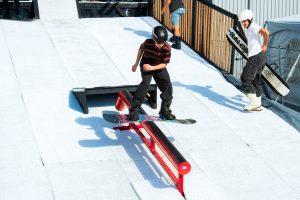
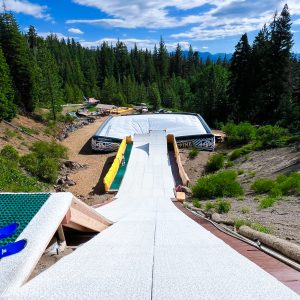
Fast glide. Strong wear resistance. Carefully controlled water use. Built for intensive skiing, snowboarding and tubing, from summer sessions to essential winter connections.
Keep people riding when snow is difficult to maintain. Extend the season for training, freestyle and tubing. Put snowmaking to work where snow contributes most to the experience.
PearlSnow is designed for years of intensive use in changing weather conditions, with a focus on lasting glide and grip. Our approach to sustainability starts with keeping that performance in service through durable construction, regular maintenance and local repair. It is supported by measured abrasion and weathering results, a defined water-use planning range and documented material composition and screening.
Sustainability at a glance
- 14 synthetic ski-surface systems compared for wear. PearlSnow and PearlTile performed best.
- 5,000-hour Xenon weathering test: about 81% of tensile strength retained by the Snow surface material and about 95% by the Pearl elements.
- Fine-mist system: one-eighth of the water of our low-pressure reference setup (87.5% less).
- Planning range: 0.15 to 0.25 litres per square metre per operating hour.
- PVC-free, with documented composition and SGS REACH/SVHC screening.
How can a synthetic ski surface help put snow where it matters most?
By covering the sections you need but cannot easily keep white, so your snowmaking can focus on the slopes where snow adds most to the ride.
At a mountain resort, some sections are essential for getting around but difficult to keep covered with snow. PearlSnow can provide a riding surface on selected lift tracks, access routes and connections without maintaining a snow layer across them. This gives operators the opportunity to focus snowmaking on the slopes where snow contributes most to the riding experience.
For dedicated training slopes, freestyle parks and tubing runs, a suitable synthetic surface can support operation beyond the winter season without manufacturing snow.
The right application depends on the activity, terrain and expected use.
How well does a synthetic ski surface hold up to wear and weather?
In our laboratory comparison, PearlSnow and PearlTile performed best, combining low measured material loss with retention of the contact structure needed for skiing.
How well does a synthetic ski surface hold up to repeated wear and outdoor exposure? And when does ageing start to affect its ability to function?
We compared 14 synthetic ski-surface systems from leading brands, examining both material loss and the condition of the riding structure after severe abrasion. In this external laboratory comparison, conducted by Protection Services Holland B.V. (PSH), PearlSnow and PearlTile performed best, combining low measured material loss with retention of the contact structure needed for skiing.
PearlSnow averaged 1.67 g material loss across three specimens under the severe 60-second P80 test (a coarse sandpaper abrasion) while retaining functional geometry.
That combination matters. A surface can lose relatively little weight yet already have lost the structure needed for normal ski-edge engagement. Measuring material loss alone does not tell the whole story. The abrasion results support PearlSnow’s potential for a longer usable life than other surfaces that lost their functional structure earlier in that test.
PearlSnow materials have also undergone a 5,000-hour Xenon Arc Weathering Test in accordance with GB/T 16422.2. This accelerated laboratory test uses xenon lamps to simulate sunlight, including UV, combined with heat, controlled humidity and water spray cycles. After testing, the Snow surface material retained approximately 81% of its original tensile strength, and the Pearl elements approximately 95%, supporting their ability to retain structural strength after prolonged environmental exposure.
Both tests provide evidence under defined laboratory conditions, rather than a guaranteed number of years outdoors.
Keeping that performance in service also means looking after the installation. Braking zones, lift exits and busy teaching areas can wear more quickly than the surrounding slope. Local repair and replacement allow operators to address those sections while keeping serviceable areas in use.
Our focus on wear and weather resistance serves the same goal: keeping the surface usable for as long as possible, with consistent glide and grip. Fewer replacements mean less demand for new materials, manufacturing and transport over the life of an installation. Every additional season of use gets more from the resources already invested in the surface.
Can you ride a synthetic ski slope dry, and what does water add?
Yes, suitable installations can run dry, but we recommend controlled water for most slopes because it takes glide further.
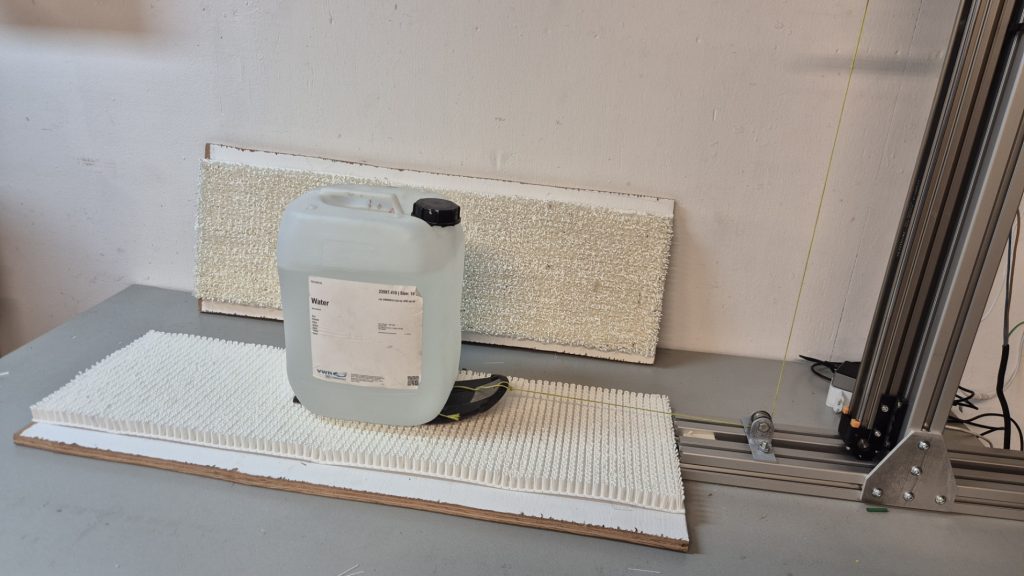
PearlSnow’s ability to operate dry starts with its glide performance. An extensive comparison test by an independent engineering firm, commissioned by PearlSnow, placed PearlSnow, PearlSlide and PearlTile among the fastest synthetic ski surfaces tested. This dry-glide performance allows suitable installations to operate without water or other conditioning, depending on the slope layout and activity.
Some PearlSnow installations already do exactly that, including Stoke Mountain in Seattle, USA.
Explore the glide comparison: [How fast is PearlSnow? Independent friction test of 11 artificial ski slope surfaces: link to blog once live]
For most slopes, we recommend controlled water application to take that glide further. Water reduces friction, helping skis, snowboards and tubes move more freely. Under suitable conditions, it can bring glide close to that of real snow, creating a more snow-like riding feel. The aim is to achieve that experience with carefully controlled water use.
How much water does a PearlSnow misting system use?
A typical planning range is 0.15 to 0.25 litres per square metre per operating hour, and our system uses one-eighth as much water as our low-pressure reference setup.
Our own PearlSnow high-pressure misting system is tailored to the slope and its operating requirements. Compared with our low-pressure reference setup, it uses one-eighth as much water, equivalent to 87.5% less water. Actual consumption depends on weather, slope design, use and operating settings.
Two operating controls help manage consumption further:
- Zoning: switch individual sections on or off to apply water where it is needed.
- Timed operation: alternate misting and pause periods according to demand and weather conditions, for example five minutes on and ten minutes off.
This allows operators to adjust water application to riding activity and changing conditions while maintaining the moisture needed for consistent glide.
The water supports glide; it is not used to manufacture a snow layer. Pumps, lifts and lighting still contribute to the facility’s energy use.
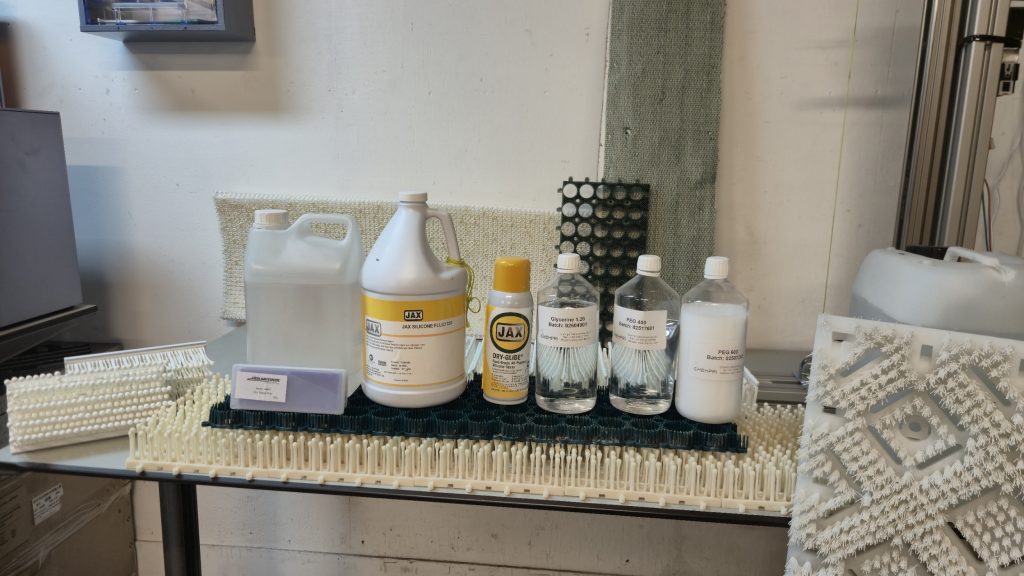
Which materials does PearlSnow use, and why?
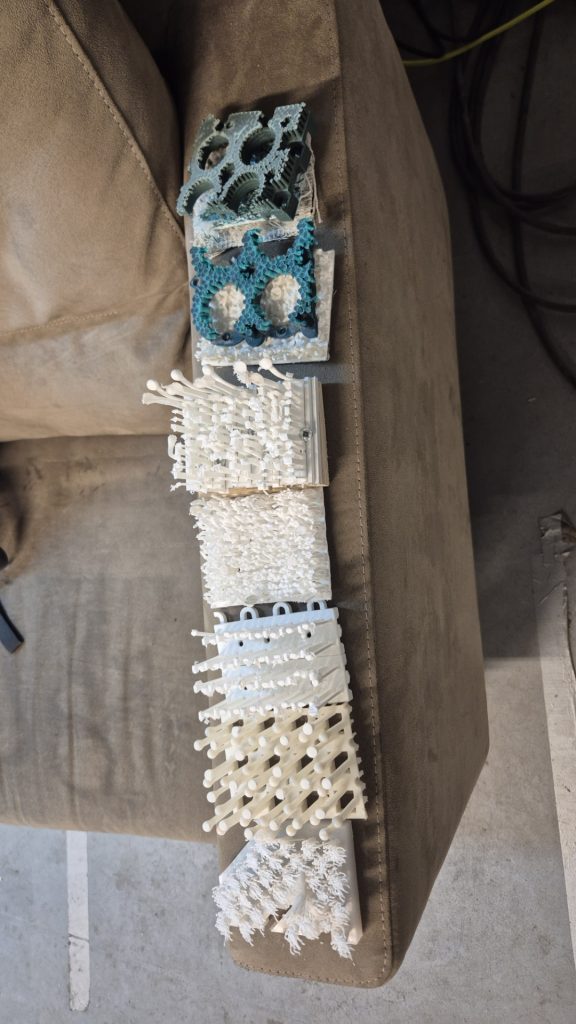
We prioritise a long usable life with lasting glide and grip, so wear-resistant nylon sits at the primary ski-contact points, supported by a flexible structure.
Beginners, freestyle riders and tubing users place different demands on a surface. Choosing the appropriate product is part of planning an installation that remains suitable for its intended use.
Our first priority is a long usable life with lasting glide and grip. In our material choices, this takes precedence over increasing the recycled-content percentage alone. Recycled materials have a valuable role where they meet the requirements for performance, durability and manufacturing.
For the PearlSnow product, wear-resistant nylon is used at the primary ski-contact points, supported by a flexible structure. This combination is designed to deliver smooth glide and reliable edge grip.
Recycled PE is a project-specific option and is not standard in current PearlSnow production. These options focus on the rear structure, away from direct riding contact, because recycled PE can create more friction than virgin material in this application. We use virgin material in the active contact structure to meet manufacturing and performance requirements.
Recycled-content configurations are assessed for each project, with the actual percentage confirmed for the delivered batch.
Is PearlSnow PVC-free, and are its materials documented?
Yes. PearlSnow is PVC-free, and its material composition and SGS REACH/SVHC screening are documented.
That gives municipalities, resorts and consultants a clearer basis for assessing the materials used in their project. This documentation sits alongside our wear, weathering and glide test results as part of the technical evidence available for project review.
What about wear particles and the surrounding environment?
PearlSnow uses a fixed construction without loose rubber or plastic infill spread across the riding surface, but repeated riding can still cause wear.
Understanding how much worn material becomes mobile, moves with rainwater or reaches the surrounding environment requires further investigation under real operating conditions.
Where appropriate, project designs can include runoff collection, sediment capture and filtration. These measures need to suit the site and remain accessible for inspection and maintenance.
The wider location matters too. Existing developed terrain and infrastructure may offer opportunities to limit additional ground disturbance. Permanent surface coverage changes the vegetation beneath it, so local ecology, drainage and eventual removal belong in the planning process from the beginning.
What has PearlSnow demonstrated so far, and what comes next?
Our current evidence includes comparative laboratory wear and glide results, accelerated weathering results, a defined planning range for misting water use, and documented material composition and SGS REACH/SVHC screening.
Our next priorities include more realistic ski-contact wear testing, field measurements of material release and stronger documentation of recycled-content options.
We are also evaluating a European processing route for recycling used mixed-material synthetic snow surfaces at the end of their life. A PearlSnow-specific recycling trial is still needed before we can offer that route as a verified service.
For installations already in use, our focus remains on maintenance, local repair and continued riding performance.
Synthetic surfaces have an environmental footprint. We will develop our sustainability information alongside the evidence: what we have measured, what we are still investigating and what we can improve.
How do you plan a slope for the way you will use it?
Start with your terrain, riders and operating plans.
Whether you are improving a resort connection or developing a training slope, snowboard park or tubing run, the right setup starts with your terrain, riders and operating plans. We will help you explore suitable surfaces, misting where appropriate, and practical requirements for maintenance and environmental management.